Launch offer — valid today only

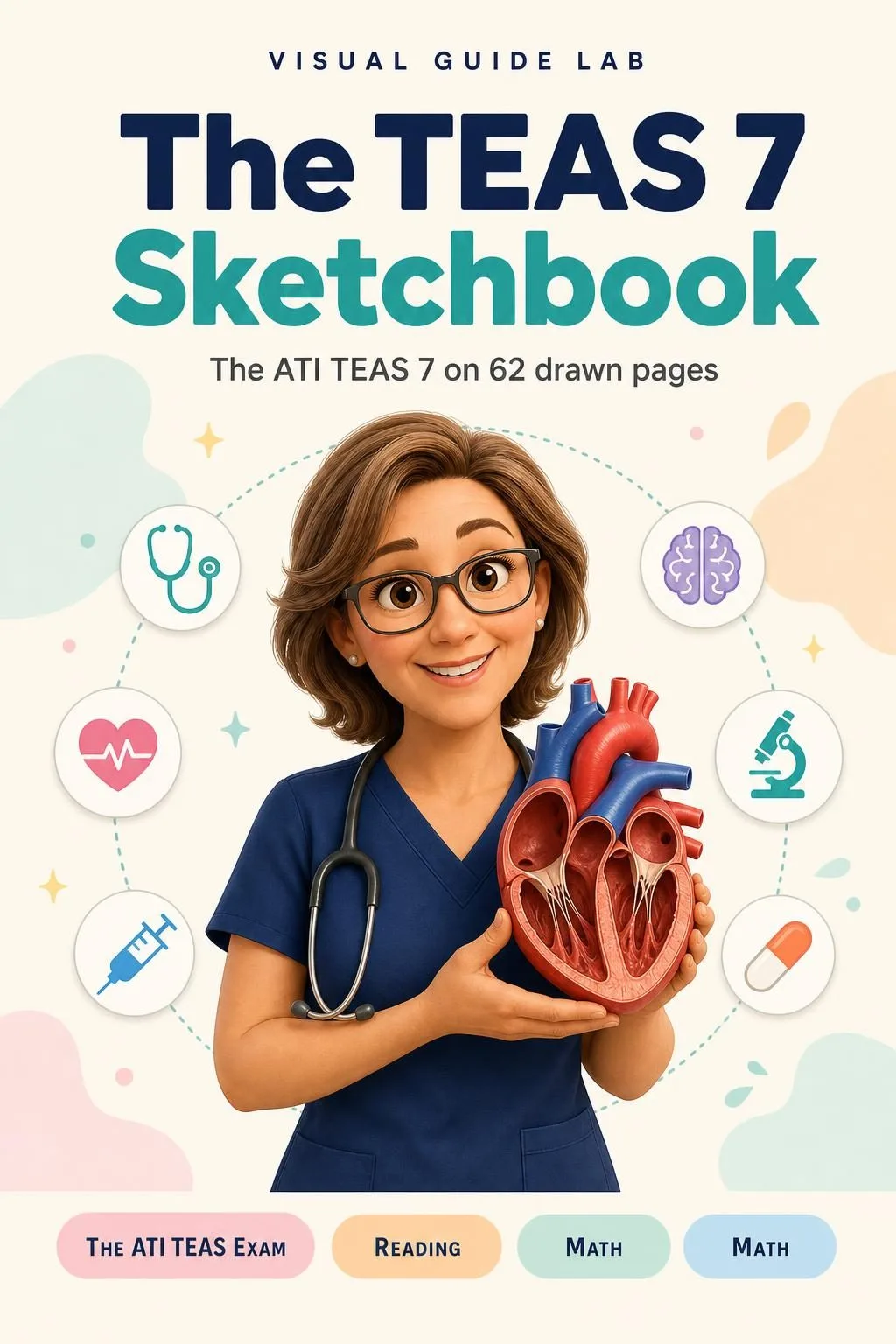
The ATI TEAS 7, Drawn One Concept per Page Reading, Math, Science and English, in the order of the official outline

The blood path through the heart, the nephron, mitosis and meiosis, unit conversions, percent problems, pH, comma rules and the main idea: in your notes it's a wall of text. Here every topic fits on one page, with the drawing and what you need to remember. 66 illustrated pages.

SHOW ME THE DRAWN PAGES

🔒 Secure checkout · PDF by email · 30-day guarantee

One topic per pagethe drawing shows you the concept and the text walks you through it
66 illustrated pages11 parts, from the exam format to test day
Up-to-date sourcesATI TEAS 7 content outline, OpenStax and NIST

This Is What the Pages You Will Study Look Like

One topic per page, the drawing that shows you how it works and the boxes with what you need to know:

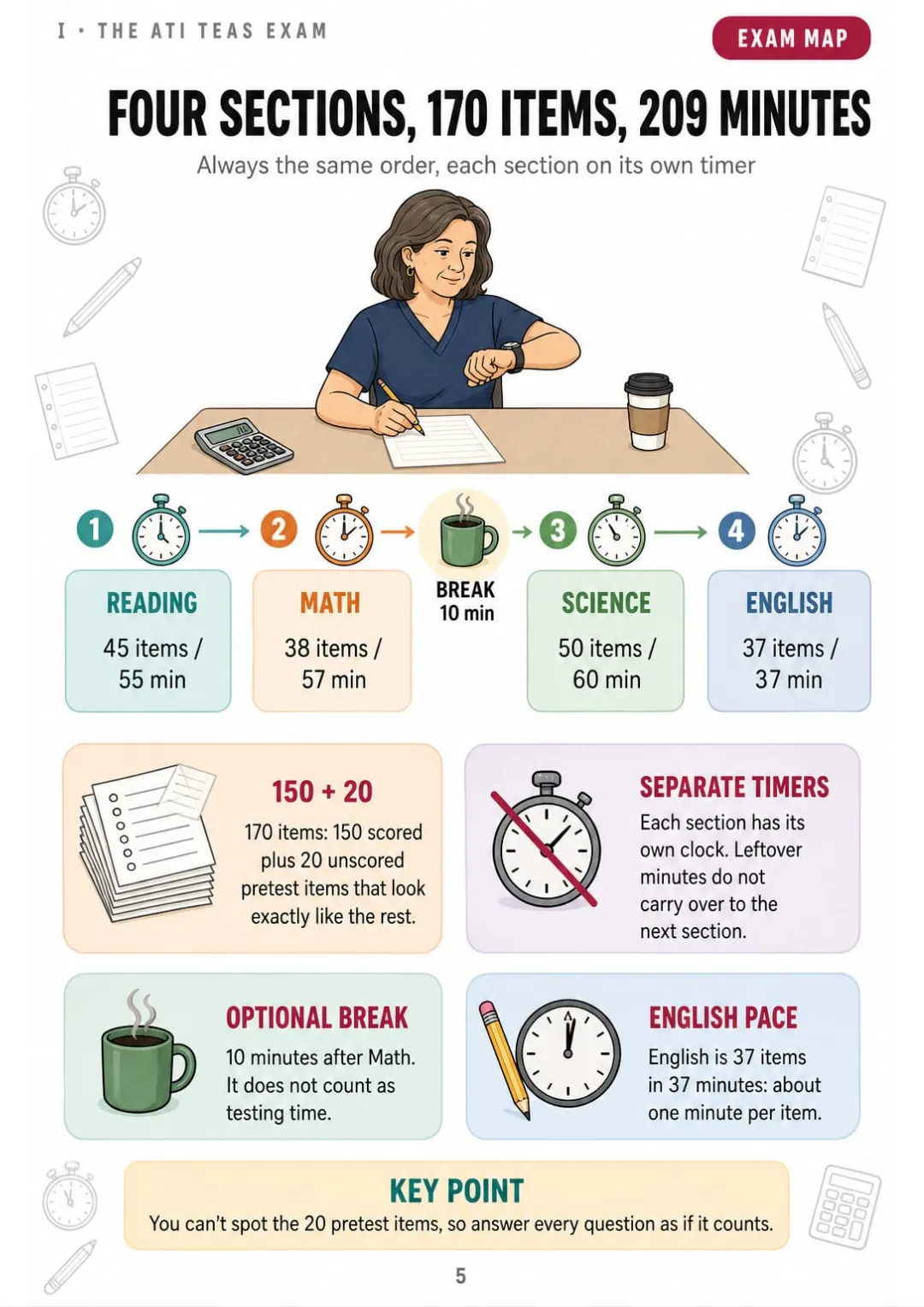
Reading 45/55 · Math 38/57 · Science 50/60 · English 37/37 · 10-min break after Math
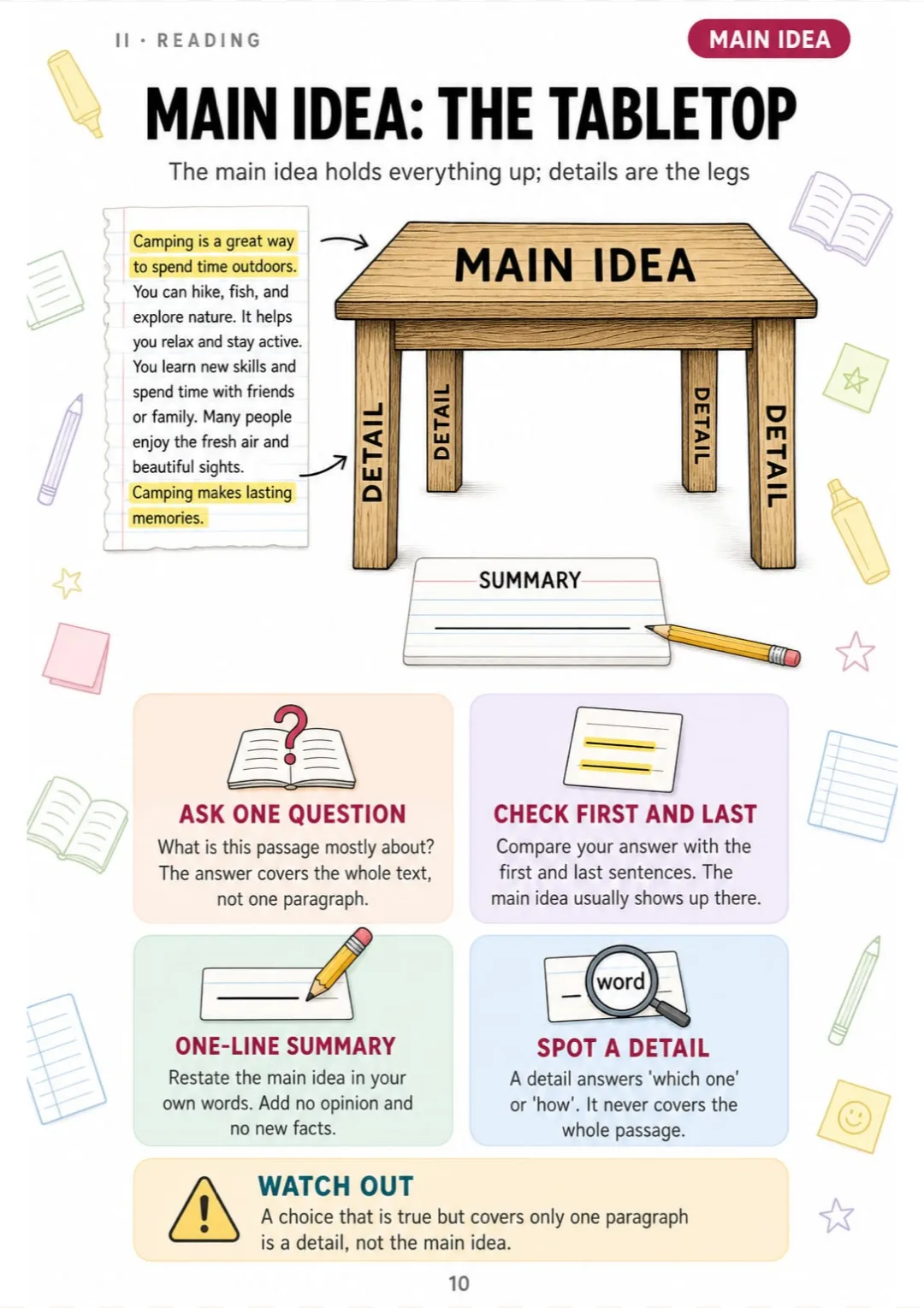
Main idea = tabletop, details = legs, summary = one line with no opinion
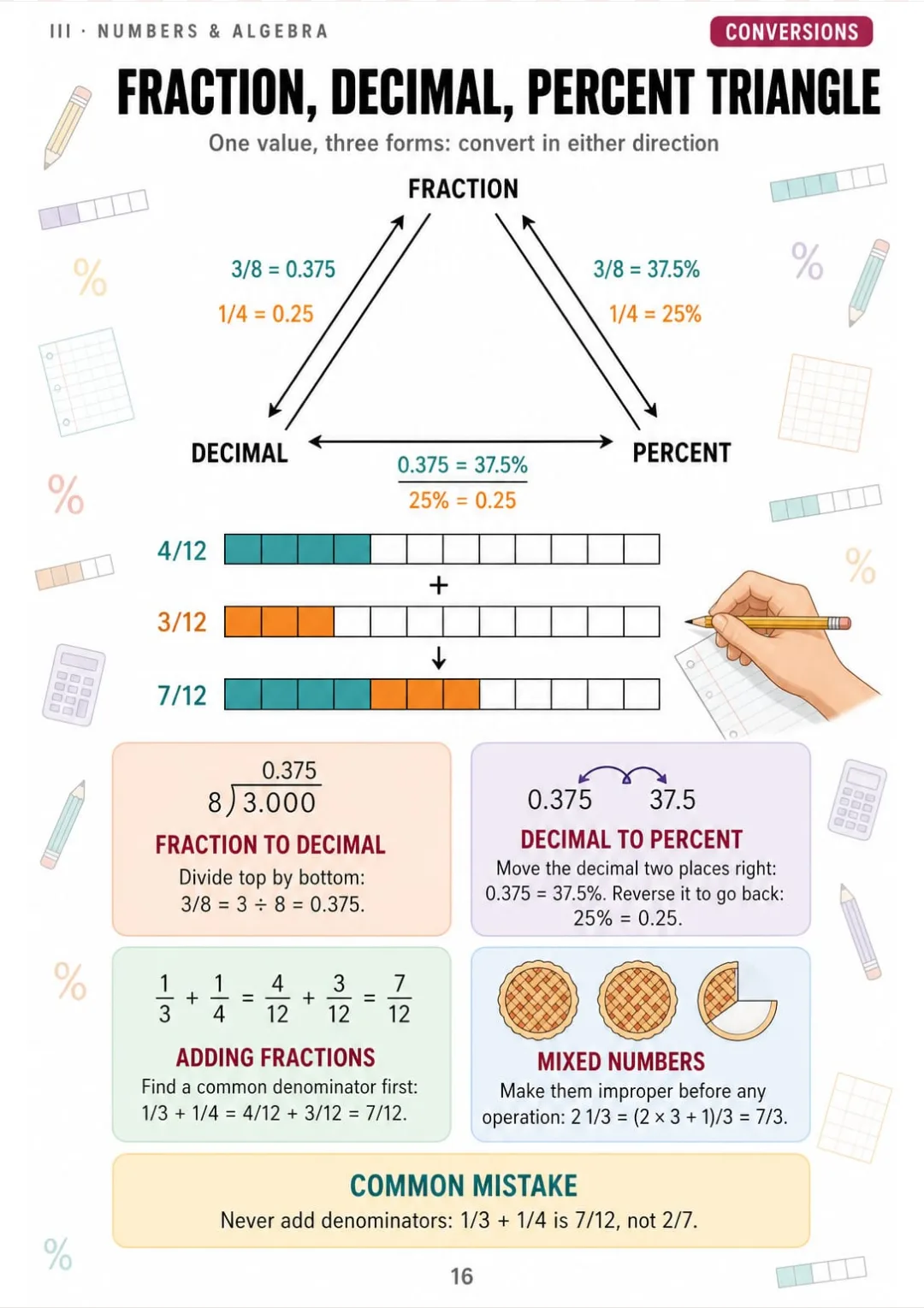
3/8 = 0.375 = 37.5% and 1/3 + 1/4 = 7/12, drawn as one triangle and fraction bars
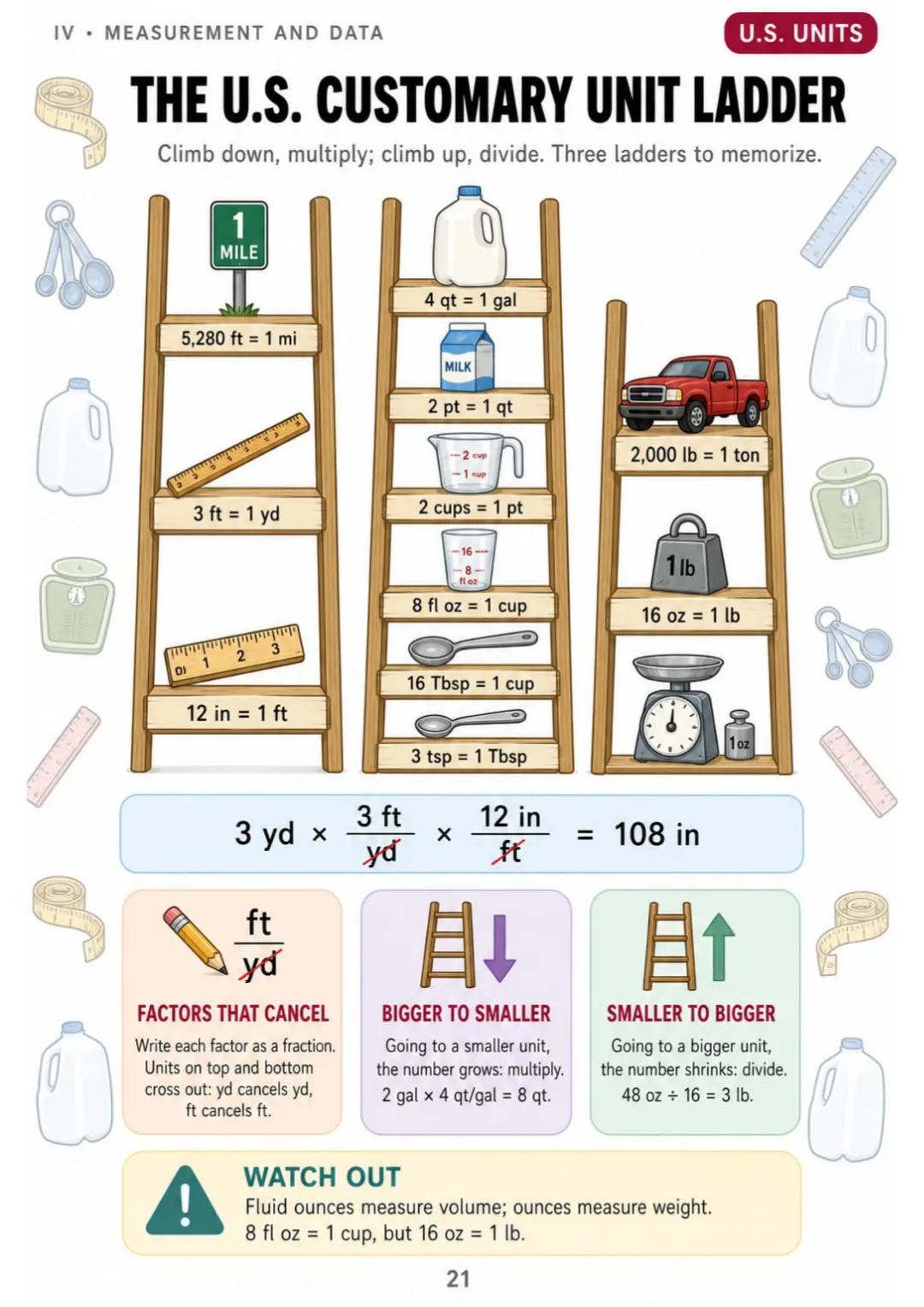
3 yd × 3 ft/yd × 12 in/ft = 108 in: units cancel, the answer stays.
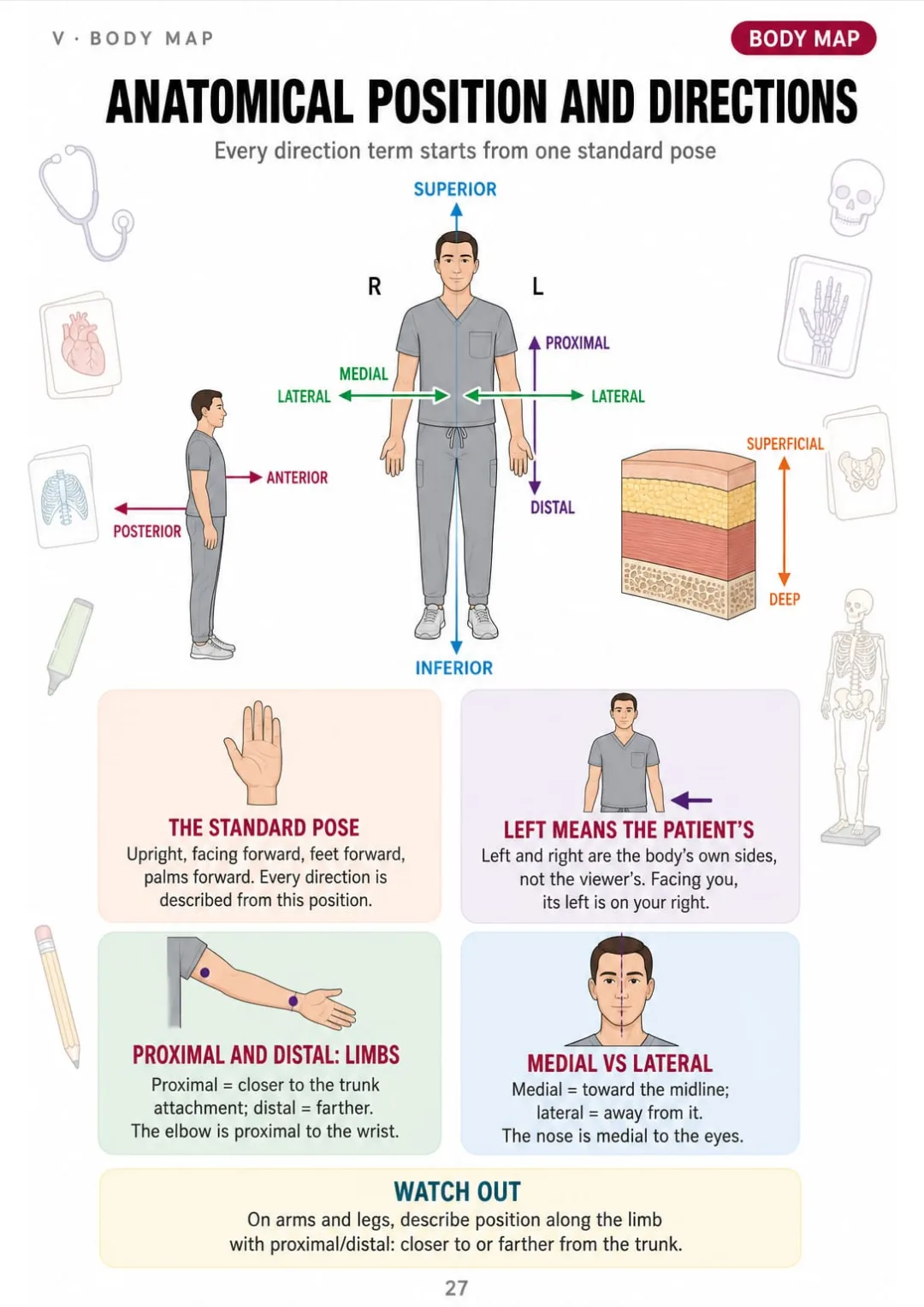
Anatomical position plus 5 direction pairs: anterior/posterior, superior/inferior, medial/lateral, proximal/distal, superficial/deep
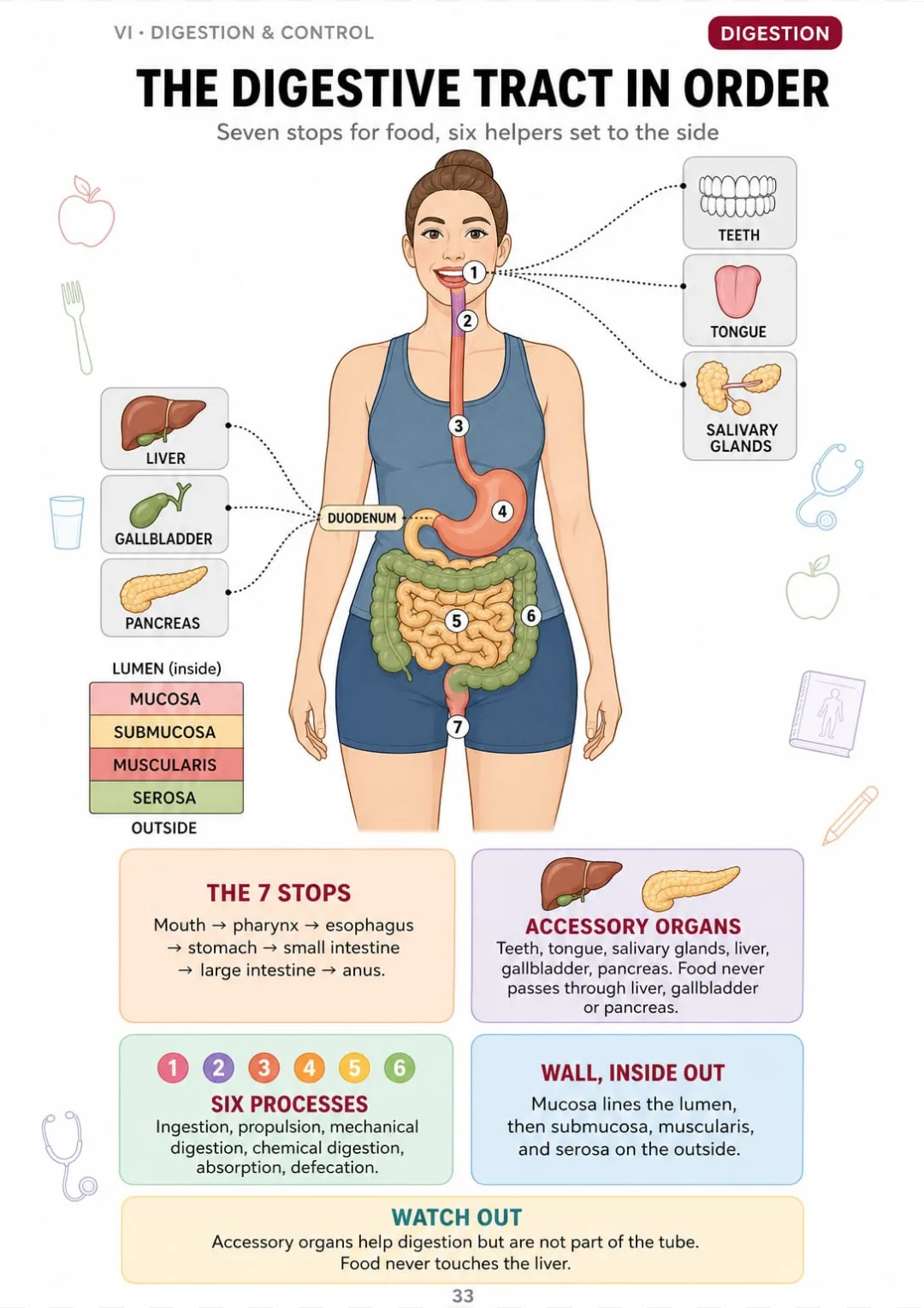
7 stops from mouth to anus, 6 accessory organs, 4 wall layers, 6 processes
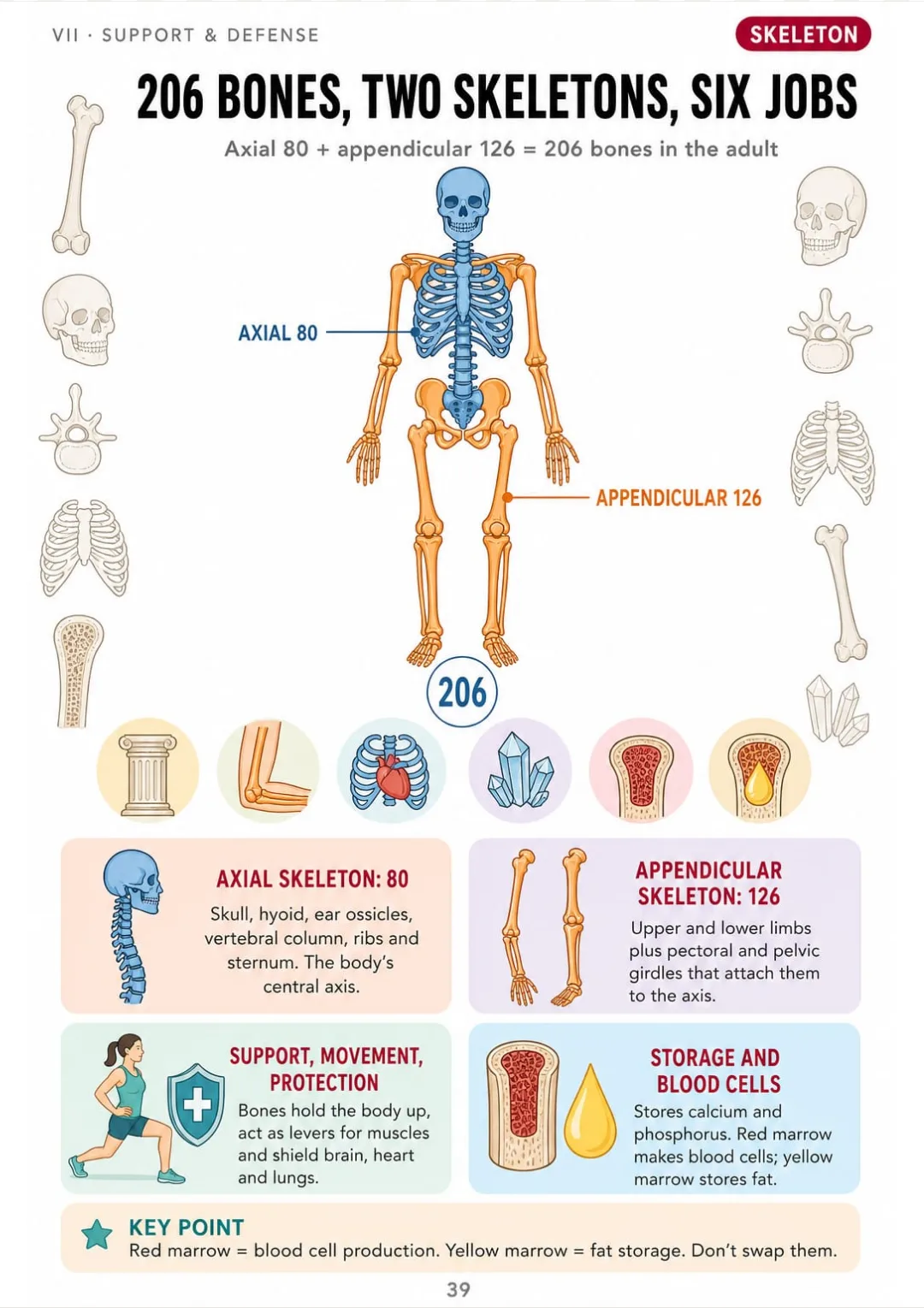
Axial 80 + appendicular 126 = 206 bones, with six jobs from support to marrow
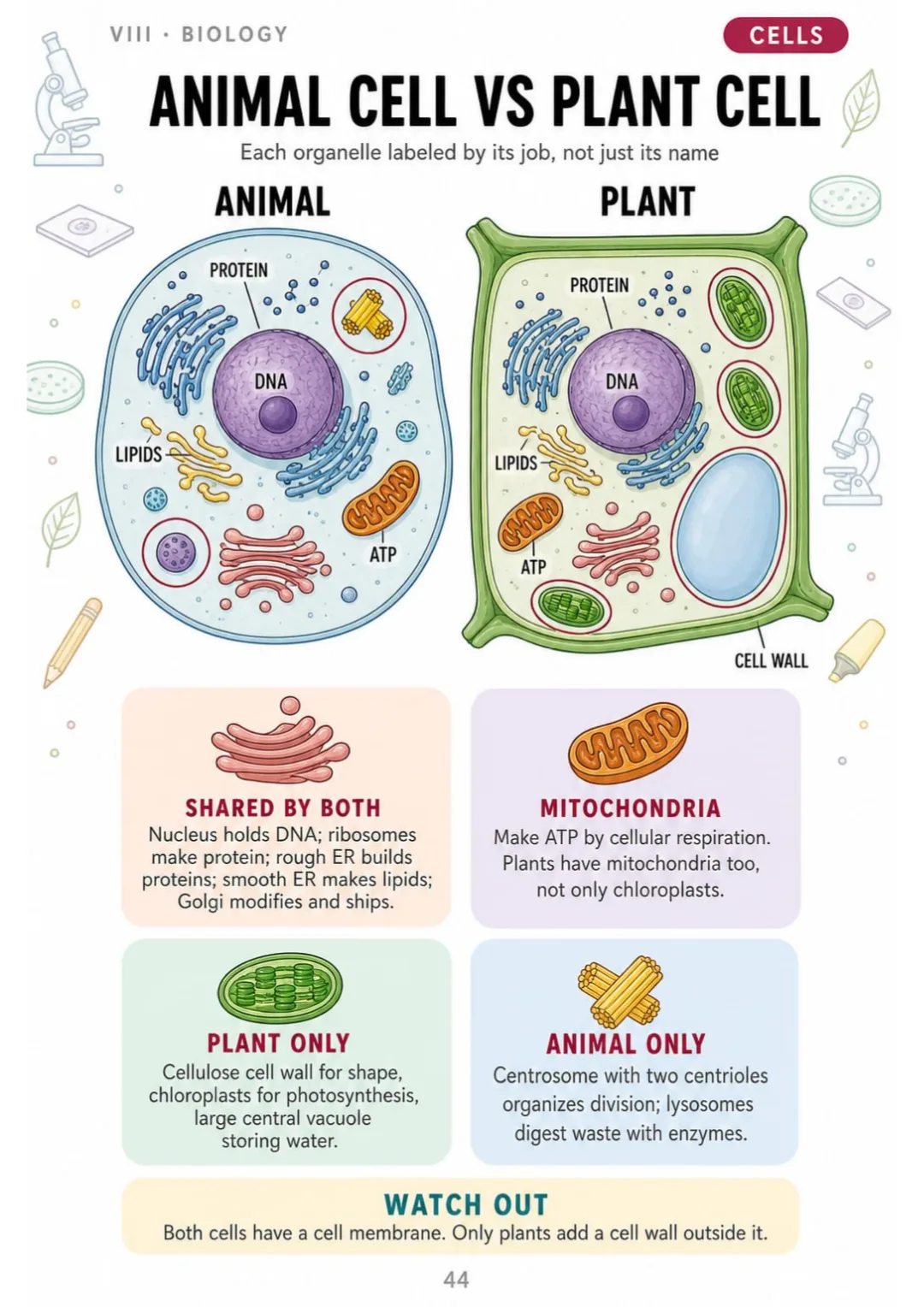
Nucleus = DNA, mitochondria = ATP; cell wall and chloroplasts only in plants.

Swipe to see more →

These are real pages from the book. The table of contents is the full one: 11 parts and 62 topics.

It's Not That You Can't Remember. It's That No One Ever Laid It Out in Order.

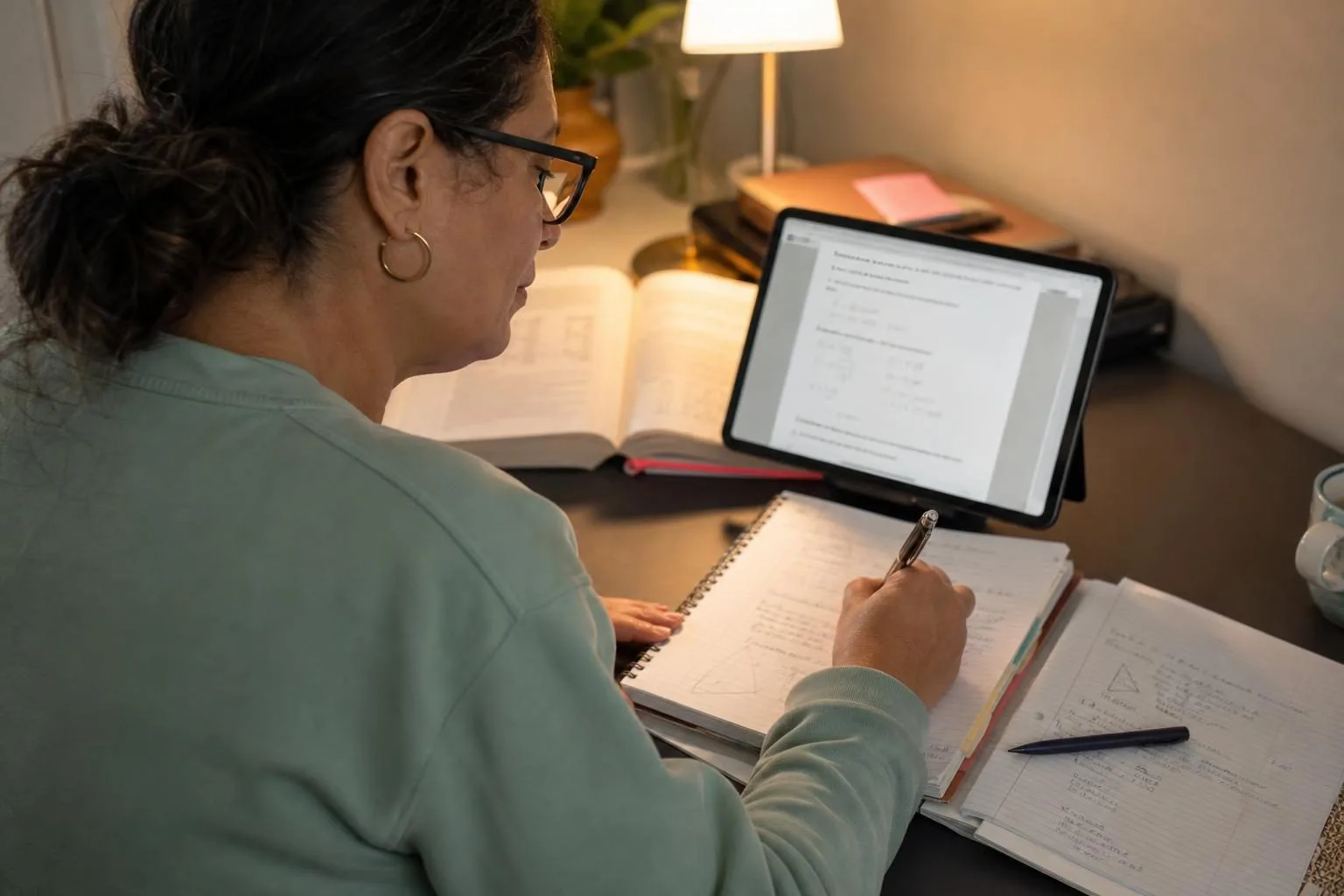
You've read how to turn 3/8 into a decimal and a percent three times. You close your notes...

...and you can't remember whether to divide first or multiply by 100. It was just lines of text.

3/8 = 0.375 = 37.5% and 1/3 + 1/4 = 7/12, drawn as one triangle and fraction bars

Here, 3/8 is one drawn triangle: the fraction at the top, the decimal and the percent at the corners, 3/8 = 0.375 = 37.5%, with fraction bars that show why 1/3 + 1/4 = 7/12.

And on the pages next to it, every topic has its own drawing: ratios and proportions, the unit ladder, the blood path through the heart, the nephron and comma rules.

First you understand why it works that way. Then the order sticks on its own.

SEE THE DIFFERENCE

Stop Memorizing Rules You Can't Picture:

THIS
  • Page after page of dense text
  • Concepts without a single drawing
  • On test day, you don't know where to start
The main idea of a passage is the central point the author intends to communicate, which may be stated explicitly in a topic sentence or implied through the cumulative effect of the supporting details. Supporting details include facts, examples, statistics and explanations that develop, clarify or substantiate the main idea. A summary, by contrast, is a condensed restatement of the passage's essential content that omits minor details and excludes the reader's personal opinion, while preserving the author's original emphasis and logical sequence.
FOR THIS
  • Every concept drawn
  • One topic per page, with the rules in boxes
  • You remember it because you've seen it
Main idea = tabletop, details = legs, summary = one line with no opinion
CONTENTS

Take a Look at the 11 Parts and 62 Topics

The exam, Reading, numbers and algebra, measurement and data, the body map, heart and lungs, digestion and control, support and defense, biology, chemistry and English, and a final review: 66 pages, all drawn

IThe ATI TEAS Exam · pp. 5-9
  1. Four Sections, 170 Items, 209 Minutes
  2. Scored Items by Sub-Area
  3. Five Question Types and No Partial Credit
  4. Scores and Academic Preparedness Levels
  5. Registration, Fees and Test Day Rules
IIReading · pp. 10-15
  1. Main Idea, Summary and Supporting Details
  2. Inferences and Conclusions from Evidence
  3. Written Directions and Event Sequences
  4. Reading Charts, Graphs and Visuals
  5. Fact, Opinion, Purpose and Point of View
  6. Evaluating Arguments Across Sources
IIIMath: Numbers and Algebra · pp. 16-20
  1. Fractions, Decimals and Percents
  2. Comparing and Ordering Rational Numbers
  3. Percent Problems and Percent Change
  4. Ratios, Rates and Proportions
  5. One-Variable Equations and Inequalities
IVMath: Measurement and Data · pp. 21-26
  1. The U.S. Customary Unit Ladder
  2. Metric Prefixes and Metric-U.S. Conversions
  3. Perimeter and Area of Polygons
  4. Circles and the Pythagorean Theorem
  5. Mean, Median and Mode
  6. Tables, Graphs and Two-Variable Relationships
VBody Map, Heart, Blood and Lungs · pp. 27-32
  1. Anatomical Position and Directional Terms
  2. Body Planes and Body Cavities
  3. Heart Chambers, Valves and Blood Path
  4. Cardiac Conduction and the ECG
  5. Blood Components and Hematocrit
  6. Airway, Alveoli and Lung Volumes
VIDigestion, Control and Filtration · pp. 33-38
  1. Digestive Tract from Mouth to Anus
  2. Small and Large Intestine Segments
  3. CNS, PNS and Autonomic Divisions
  4. Neuron, Action Potential and Synapse
  5. Endocrine Glands and Feedback Loops
  6. Kidney, Nephron and Urine Formation
VIISupport, Defense and Reproduction · pp. 39-43
  1. The 206-Bone Skeleton and Its Jobs
  2. Muscle Types and the Sliding Filament
  3. Skin Layers and Their Cells
  4. Innate and Adaptive Immunity
  5. Reproductive Organs and the Ovarian Cycle
VIIIBiology · pp. 44-49
  1. Cell Organelles: Animal vs Plant
  2. Mitosis vs Meiosis
  3. From DNA to RNA to Protein
  4. Punnett Squares and Mendel's Laws
  5. Four Macromolecules and Their Building Blocks
  6. Bacteria, Viruses and Disease
IXChemistry and Scientific Reasoning · pp. 50-55
  1. Inside the Atom: Protons, Neutrons, Electrons
  2. Periodic Table Groups and Bond Types
  3. States of Matter and Physical vs Chemical Change
  4. Reaction Types and Reaction Rates
  5. Solutions, Acids, Bases and pH
  6. Scientific Method, Variables and Controls
XEnglish and Language Usage · pp. 56-61
  1. Four Sentence Types
  2. Fragments, Comma Splices and Run-Ons
  3. Commas, Semicolons and Colons
  4. Apostrophes, Agreement and Pronouns
  5. Voice, Audience and Paragraph Order
  6. Word Parts: Roots, Prefixes and Suffixes
XIReview and Test Day · pp. 62-66
  1. Pacing Plan for Each Section
  2. Frequent Science Mix-Ups
  3. Frequent Math Errors
  4. Reading and Grammar Traps
  5. Test Day Checklist

What If Every Topic Fit on a Single Page?

Picture this:

Instead of rereading half a page about the blood path through the heart without being able to see it...

...you open the page and find the heart cut open, with numbered arrows from the right atrium to the aorta.

Anatomical position plus 5 direction pairs: anterior/posterior, superior/inferior, medial/lateral, proximal/distal, superficial/deep

And the nephron, mitosis, unit conversions, pH and comma rules turn into drawings and tables you can read at a glance.

You stop repeating and start understanding.

That's exactly what The TEAS 7 Sketchbook does. It's not “just another prep book.” It's 66 pages in 11 parts, one drawn topic per page, and at the end a review of frequent science mix-ups, math errors, reading and grammar traps, plus a test day checklist.

Because what your brain sees organized, it remembers.

Here Is What You Get with The TEAS 7 Sketchbook:

Ipp. 5-9

The ATI TEAS Exam

How the four sections, 170 items and 209 minutes are split, scored items by sub-area, the five question types, scores and preparedness levels, and test day rules.

IIpp. 10-15

Reading

Main idea and supporting details, inferences, written directions, charts and graphs, fact vs. opinion and point of view, and arguments across sources.

IIIpp. 16-20

Math: Numbers and Algebra

Fractions, decimals and percents, ordering rational numbers, percent change, ratios and proportions, and one-variable equations and inequalities.

IVpp. 21-26

Math: Measurement and Data

The U.S. customary unit ladder, metric prefixes and conversions, perimeter and area, circles and the Pythagorean theorem, mean, median and mode, and graphs.

Vpp. 27-32

Body Map, Heart, Blood and Lungs

Anatomical position and directions, body planes and cavities, the heart's chambers, valves and blood path, conduction and the ECG, blood and hematocrit, and the lungs.

VIpp. 33-38

Digestion, Control and Filtration

The digestive tract and the intestines, the CNS, PNS and autonomic divisions, the neuron and synapse, endocrine feedback loops, and the nephron.

VIIpp. 39-43

Support, Defense and Reproduction

The 206-bone skeleton, muscle types and the sliding filament, skin layers, innate and adaptive immunity, and the reproductive organs and ovarian cycle.

VIIIpp. 44-49

Biology

Animal and plant cells, mitosis vs. meiosis, DNA to RNA to protein, Punnett squares, the four macromolecules, and bacteria and viruses.

IXpp. 50-55

Chemistry and Scientific Reasoning

The atom, periodic table groups and bonds, states of matter, reaction types and rates, acids, bases and pH, and the scientific method.

Xpp. 56-61

English and Language Usage

Sentence types, fragments and run-ons, commas, semicolons and colons, apostrophes and agreement, voice and paragraph order, and word parts.

XIpp. 62-66

Review and Test Day

A pacing plan for each section, frequent science mix-ups, frequent math errors, reading and grammar traps, and a test day checklist.

At the end of the book: A final review part: frequent mix-ups, math errors, grammar traps and a test day checklist.
And That Is Not All: 2 More Books, Free

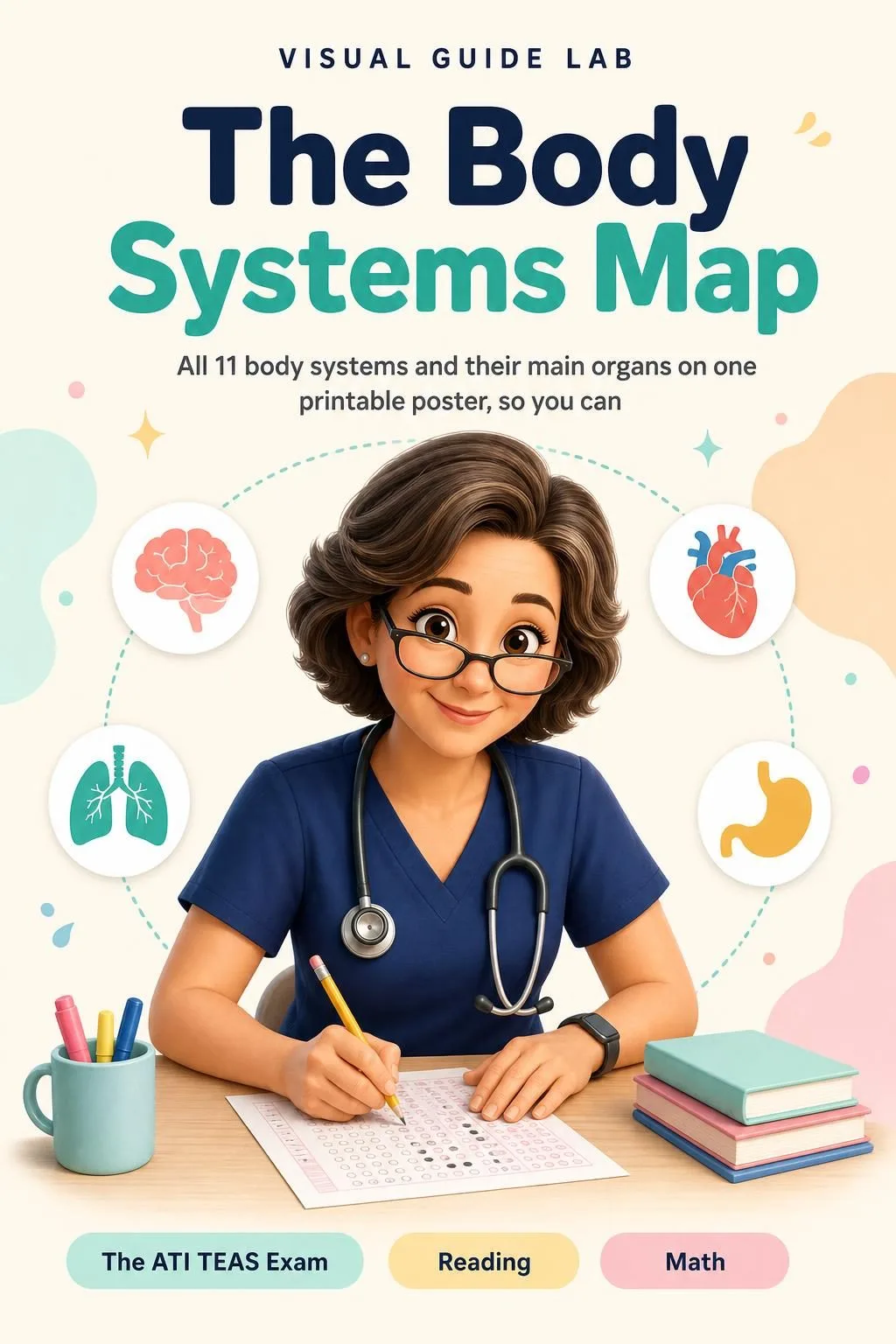
The Body Systems Map

BONUS 1: «The Body Systems Map»

Value on its own: US$ 17.90

All 11 body systems and their main organs on one printable poster, so you can see how the anatomy and physiology questions fit together at a glance.

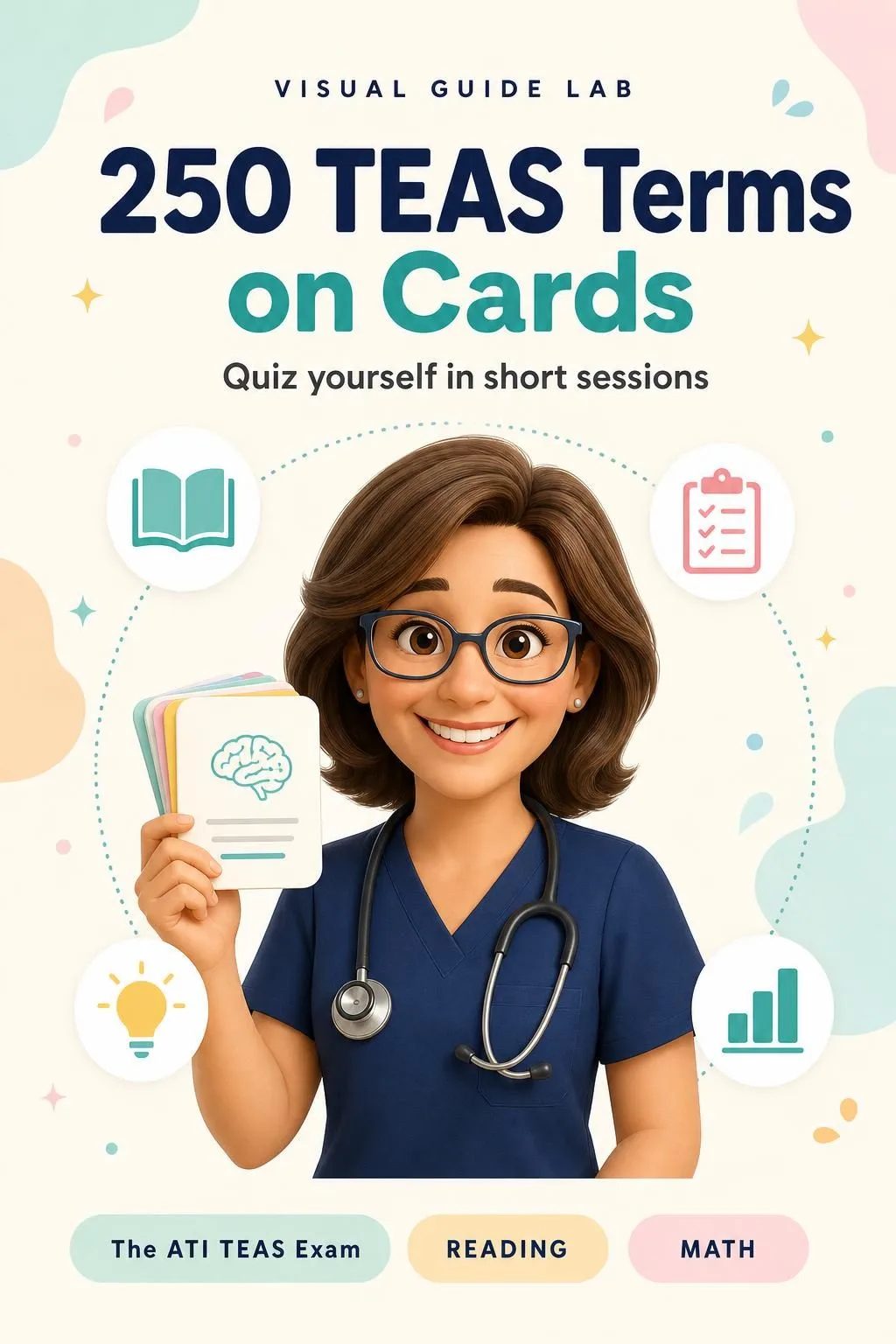
250 TEAS Terms on Cards

BONUS 2: «250 TEAS Terms on Cards»

Value on its own: US$ 14.90

Quiz yourself in short sessions: the term on the front, a one-line definition and a tiny sketch on the back, ready to print and cut.

The TEAS 7 Sketchbook + 2 Free Books

  • The TEAS 7 Sketchbook: 66 illustrated pagesUS$ 87
  • BONUS 1: The Body Systems MapUS$ 17.90
  • BONUS 2: 250 TEAS Terms on CardsUS$ 14.90
  • High-resolution PDF to printIncluded
Total value US$ 119.80
YOUR PRICE:
US$ 37
You save US$ 82.80
YES, I WANT THE TEAS 7 SKETCHBOOK FOR US$ 37

📄 This is a digital PDF book sent to your email: nothing is printed or shipped.

Secure purchaseEncrypted payment30-day guarantee

PDF by email: The TEAS 7 Sketchbook reaches your inbox as a PDF, and the two free books come by email too. One-time payment, no installments or hidden costs.

Is This Book for You?

You're getting ready to apply

You're getting ready to apply

All four sections in the order of the official outline, one topic per page, starting from the basics, even if it's been 20 years since your last algebra class.

Your test date is coming up

Your test date is coming up

A fast review of Science and Reading, the two biggest sections, plus Math worked step by step. At the end, a pacing plan, the frequent mix-ups and a test-day checklist. It also works for a retake, if your score fell short of your program's minimum.

You already work near health care

You already work near health care

If you're a CNA, a medical assistant or work at a clinic front desk, it puts what you see every day in order: the heart, the lungs, digestion and the cell, drawn.

To Sum Up: Here Is What You Get

US$ 119.80US$ 37
YES, I WANT THE TEAS 7 SKETCHBOOK FOR US$ 37

📄 This is a digital PDF book sent to your email: nothing is printed or shipped.

30DAYS
GUARANTEE

30-Day Guarantee

30-day guarantee: tell us what didn't work and we'll refund 100%.

You have 30 days to try The TEAS 7 Sketchbook and the two bonus books. If it doesn't work for you, tell us what didn't work and we'll refund 100% of what you paid. One-time payment, no subscriptions.

Frequently Asked Questions

How do I get the material?

You get The TEAS 7 Sketchbook as a high-resolution PDF by email, at the address you enter at checkout. Read it on your phone or print it at home, in color or black and white. The two bonus books, The Body Systems Map and 250 TEAS Terms on Cards, come by email too, and the cards are laid out to print and cut.

Is it a monthly or a one-time payment?

A one-time payment of US$ 37. No installments, no subscription.

Who is it for?

For adults applying to a nursing or allied health program that asks for the ATI TEAS 7: career changers, CNAs, medical assistants, parents going back to school and anyone retaking it. It starts from the basics, so it works even if it's been years. Check the table of contents above to see every topic.

What sources is it based on?

The topic order and the item counts follow the public ATI TEAS 7 content outline (2022). Science and math are checked against OpenStax textbooks (Anatomy and Physiology 2e, Biology 2e, Chemistry 2e, Prealgebra 2e) and NIST for units. It's written for version 7, not the old TEAS 6.

Is it official ATI material?

No. It's our own original material with our own drawings. It follows the public content outline, but it isn't affiliated with or endorsed by ATI (Assessment Technologies Institute). TEAS and ATI TEAS are trademarks of their owners.

Does it replace a prep course or my prerequisite classes?

No. It's a visual study aid to review and organize what you study. It doesn't replace your classes, ATI's official materials or your program's requirements, and it isn't medical advice. Each program sets its own minimum score.

Are the practice questions the real exam questions?

No. The worked examples in the book are written for this series and aren't official TEAS items. The 300-question Practice Sets are an optional add-on you can choose at checkout. They aren't part of the US$ 37, and they aren't official items either: they're there to help you practice.

I already have a TEAS question book. What does this add?

A question book tells you that you got it wrong. This shows you why. Every topic is on one page, drawn, in the order of the official outline, so when you miss a question you know exactly which page to go back to. They work together.

What if I don't like it?

You have 30 days. Tell us what didn't work and we'll refund 100% of what you paid.

One Last Thing Before You Decide...

You don't have to reread the same page hoping it sticks this time.

You don't have to memorize body systems you can't picture.

And you certainly don't have to walk into the TEAS not knowing where to start.

There's an easier way. And it's one click away. Now it's your turn.

One-time payment: US$ 37 · Guarantee: 30 days · PDF by email

YES, I WANT THE TEAS 7 SKETCHBOOK FOR US$ 37

📄 This is a digital PDF book sent to your email: nothing is printed or shipped.